
The TRUSTED Framework
TRUSTED is a pre-inquiry trust framework for career colleges. It names seven surfaces a prospective student encounters before they ever contact an institution — and argues that the decision to inquire is made across those surfaces, not at the moment of inquiry. Each letter is one surface. Together, they are the architecture of institutional credibility.
Developed by John P. Girard, Girard Advisory Group · Chagrin Falls, Ohio
The inquiry is not the beginning of the funnel anymore
Today's prospective career college student has usually reached a working verdict on your school before they ever contact you. They have read your reviews. They have asked an AI assistant whether your program is credible. They have looked at your program page and compared your stated outcomes to what graduates say on LinkedIn. They have formed an opinion about whether your campus is the kind of place that will treat them well.
The TRUSTED framework is built on that reality. It does not argue that the inquiry conversation is unimportant — it argues that the inquiry conversation is downstream of seven surfaces the institution has either managed or neglected. A campus that manages all seven earns inquiries from prospects who have already decided to trust it. A campus that neglects them competes on price and proximity alone.
The framework is also a diagnostic tool. When enrollment is declining, the question is not "what is wrong with our admissions team?" It is "which of the seven surfaces is failing?" The answer determines the intervention.
Surface 1 of 7
Transparent brand
Trust begins with coherence.
A prospective student encounters a career college across many surfaces before they ever contact it — a website, a social post, a program page, a Google result, an employer comment. When those surfaces tell different stories, the institution reads as unreliable. Coherence is not polish; it is alignment. The brand that earns trust is the one that says the same thing everywhere, and means it.
Read: Brand fragmentation is a tax on every acquisition dollar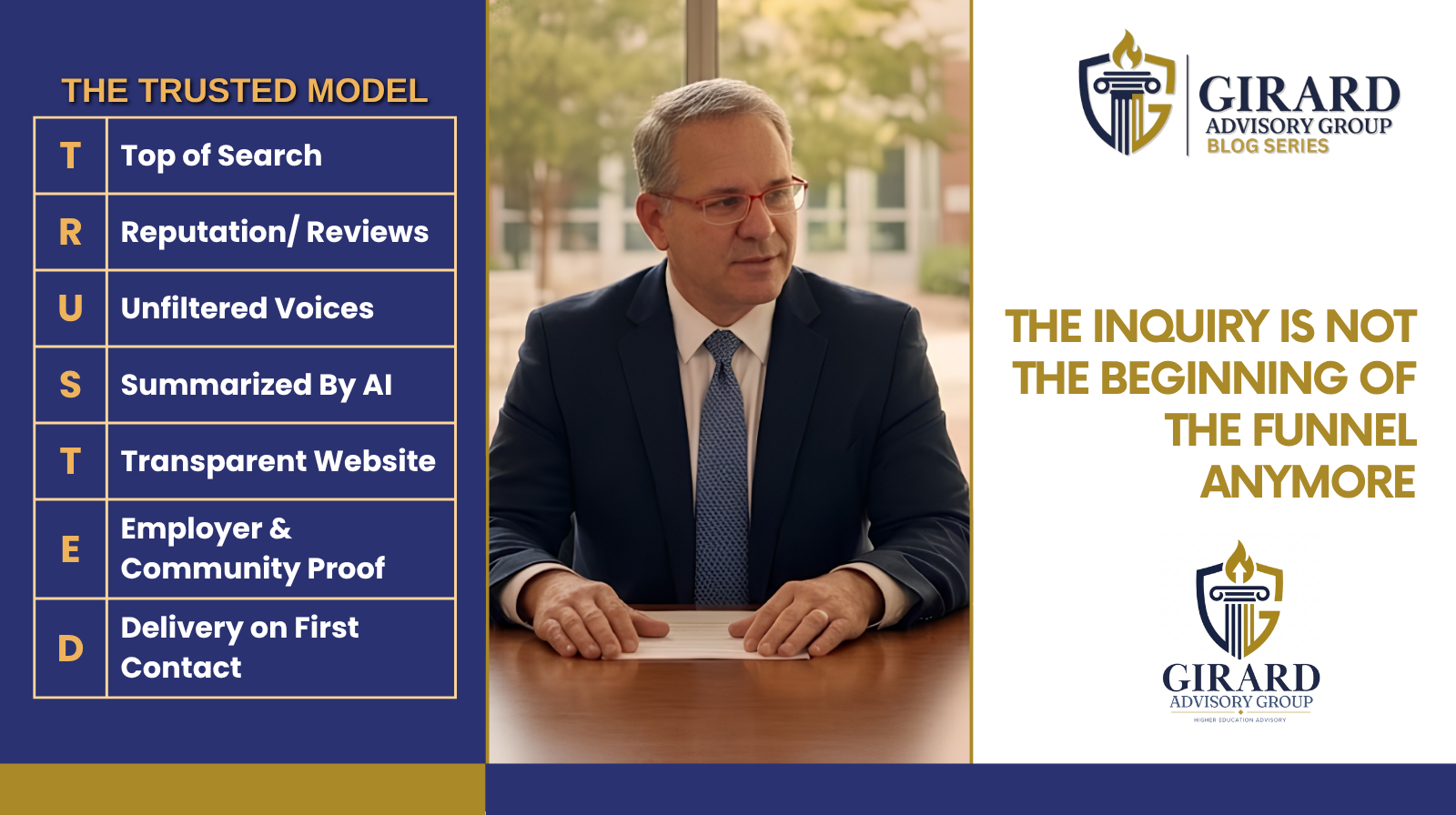
Surface 2 of 7
Reputation management
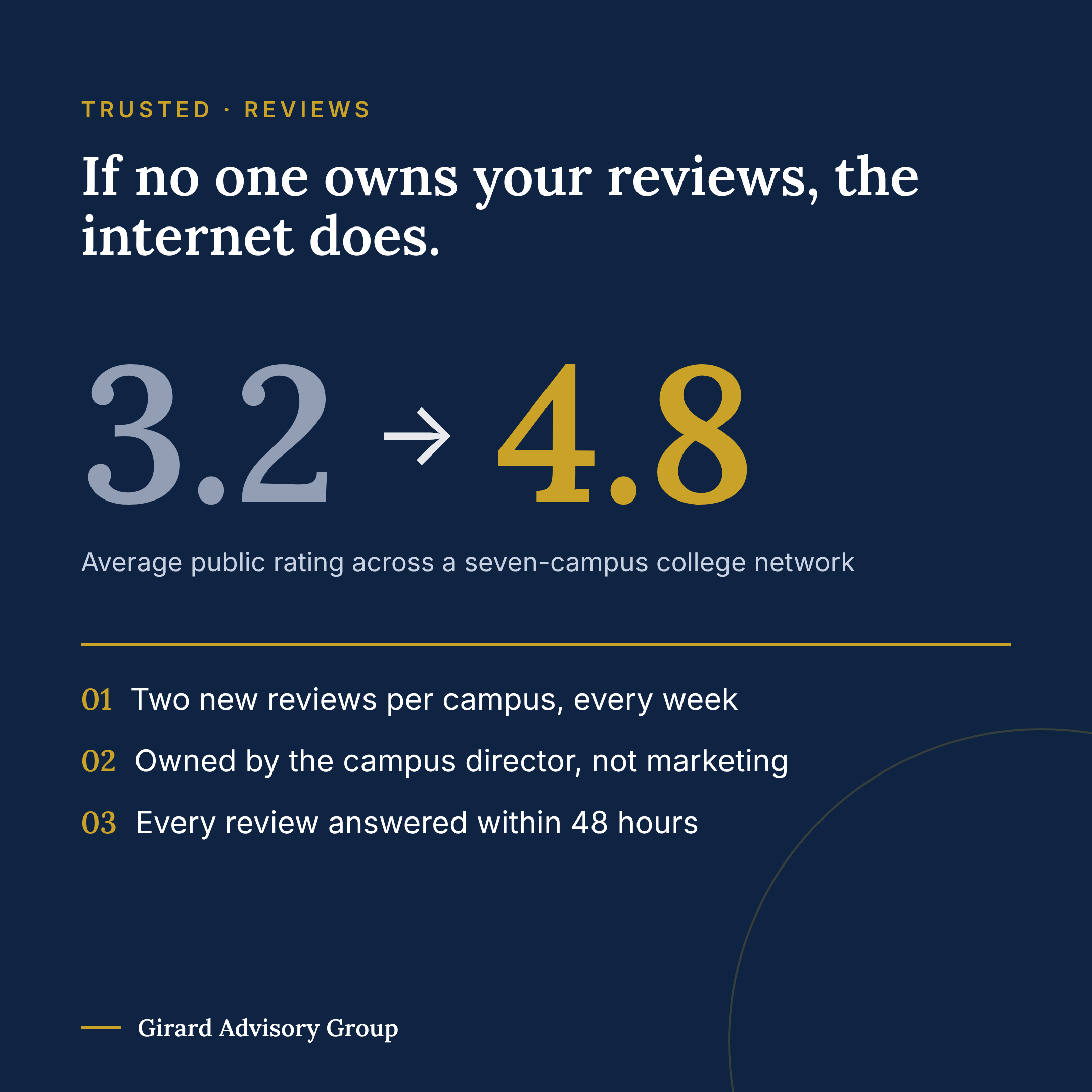
Reputation is where the promise is tested.
Brand creates the expectation. Reputation records whether the institution met it. Reviews, comments, referrals, and employer feedback are not a separate marketing channel — they are the evidence AI assistants, search engines, and prospective students use to verify the brand's claims. A campus that does not manage its reputation actively is not neutral; it is ceding the narrative to whoever posts last.
Read: Reputation and review management for career colleges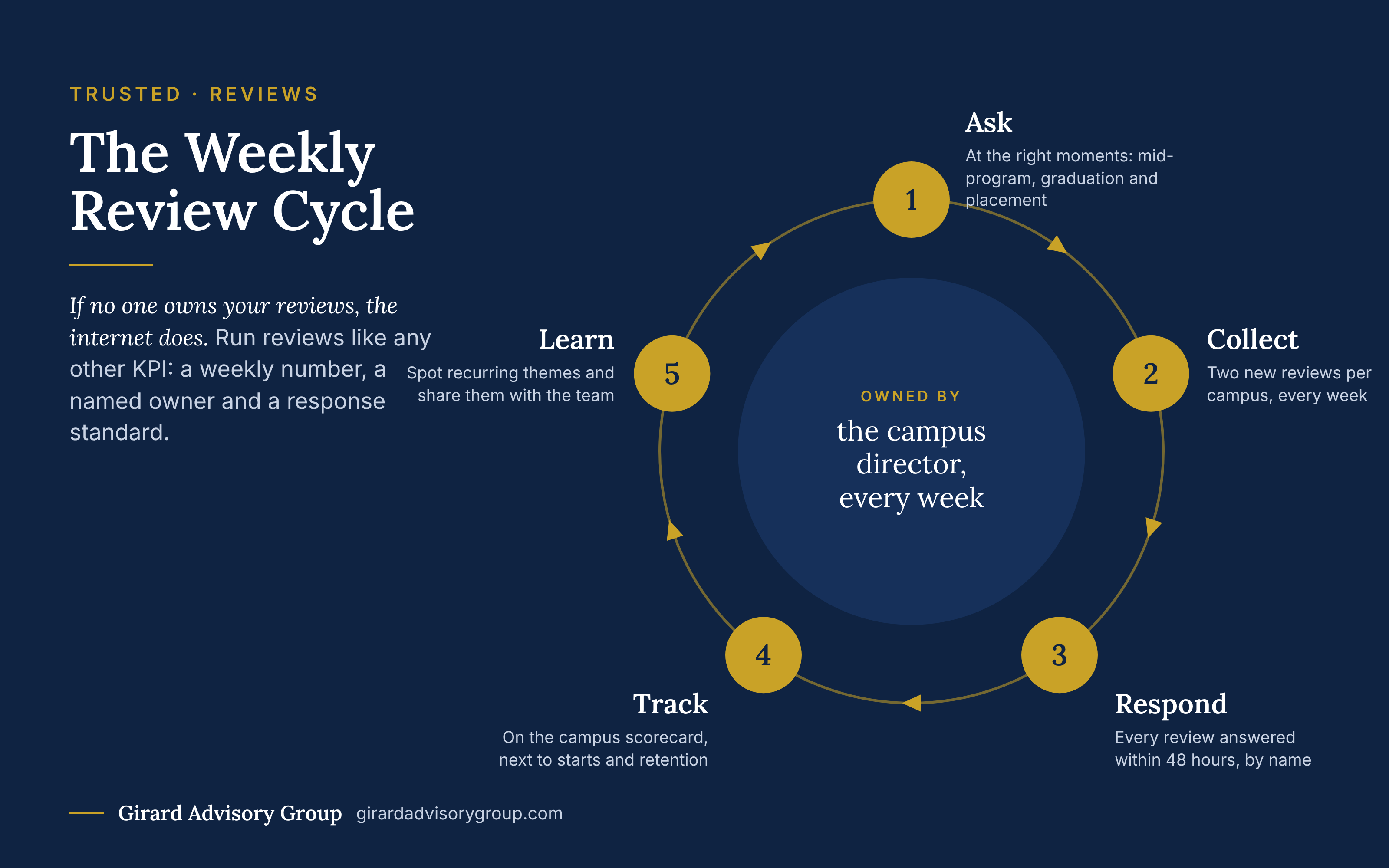
Surface 3 of 7
Understood by AI
AI has become the new front door.
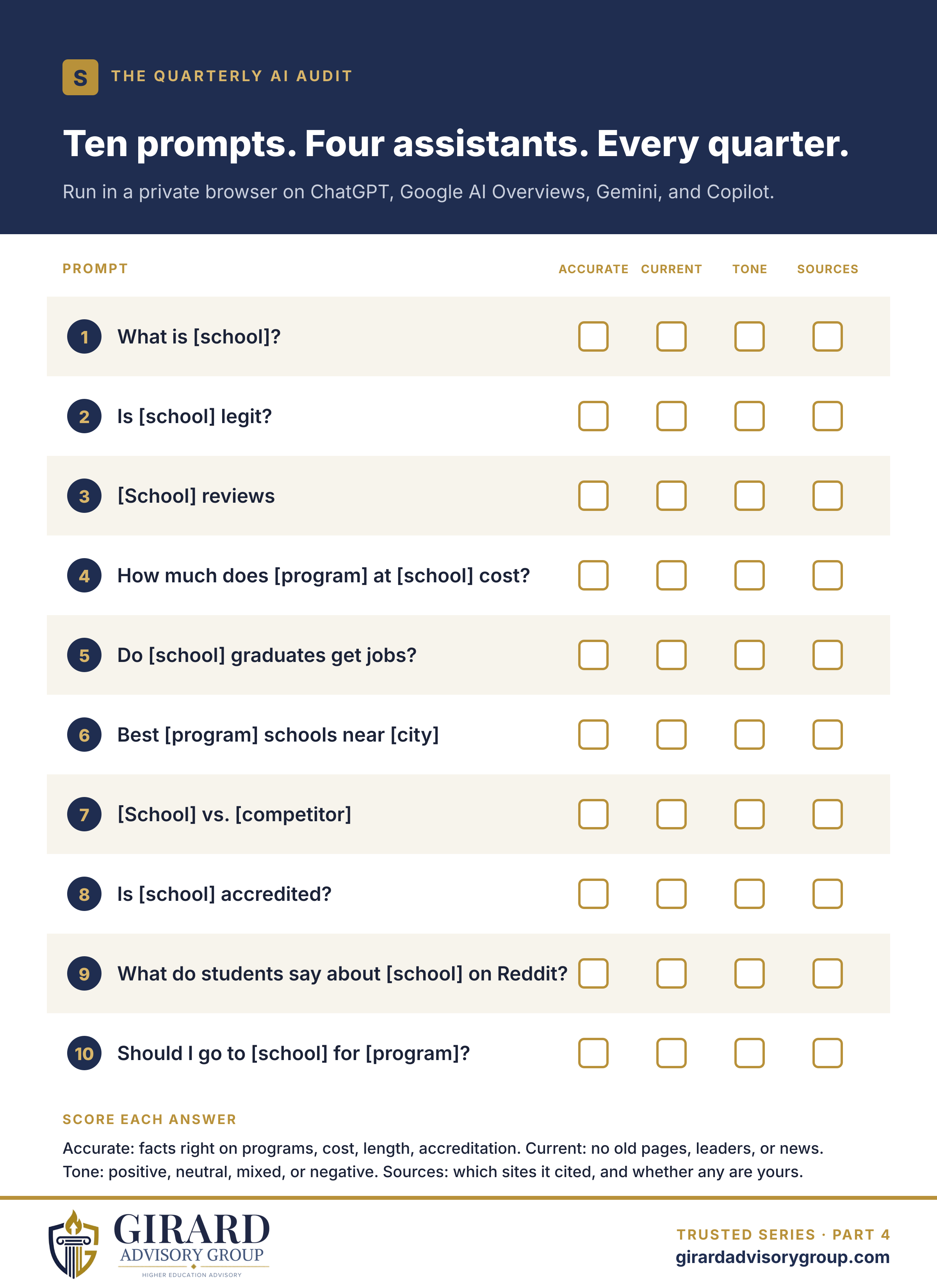
Increasingly, prospective students ask an AI assistant where to train, which program fits, what outcomes to expect, or whether a school is credible. That assistant answers from what it has indexed — reviews, program pages, accreditation records, employer mentions, and published content. A campus that has not built an AI-readable presence is invisible to a growing share of its prospective students before the first conversation begins.
Read: AI is now your prospective student's first advisor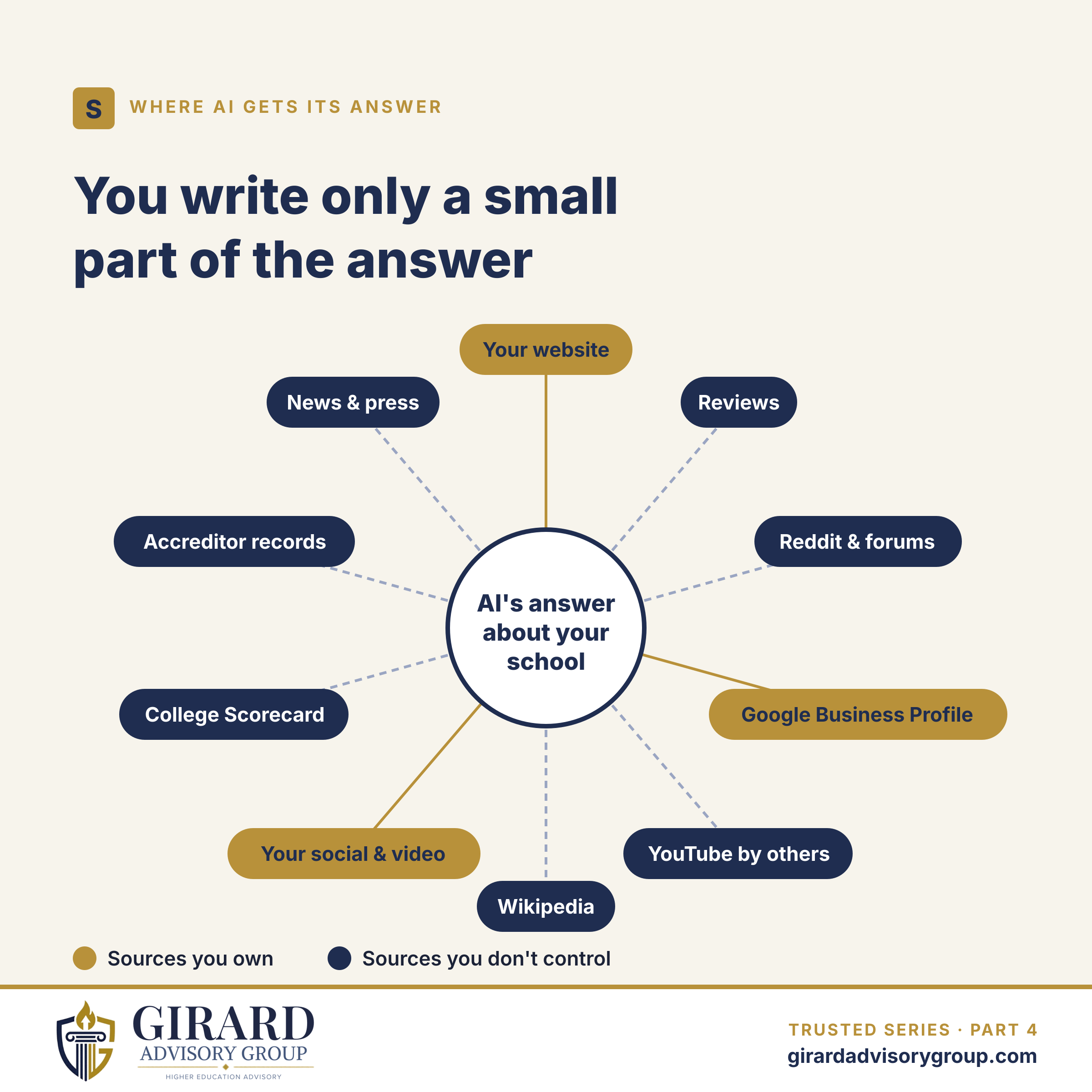
Surface 4 of 7
Supported by operations
The inside of the institution must support the outside.
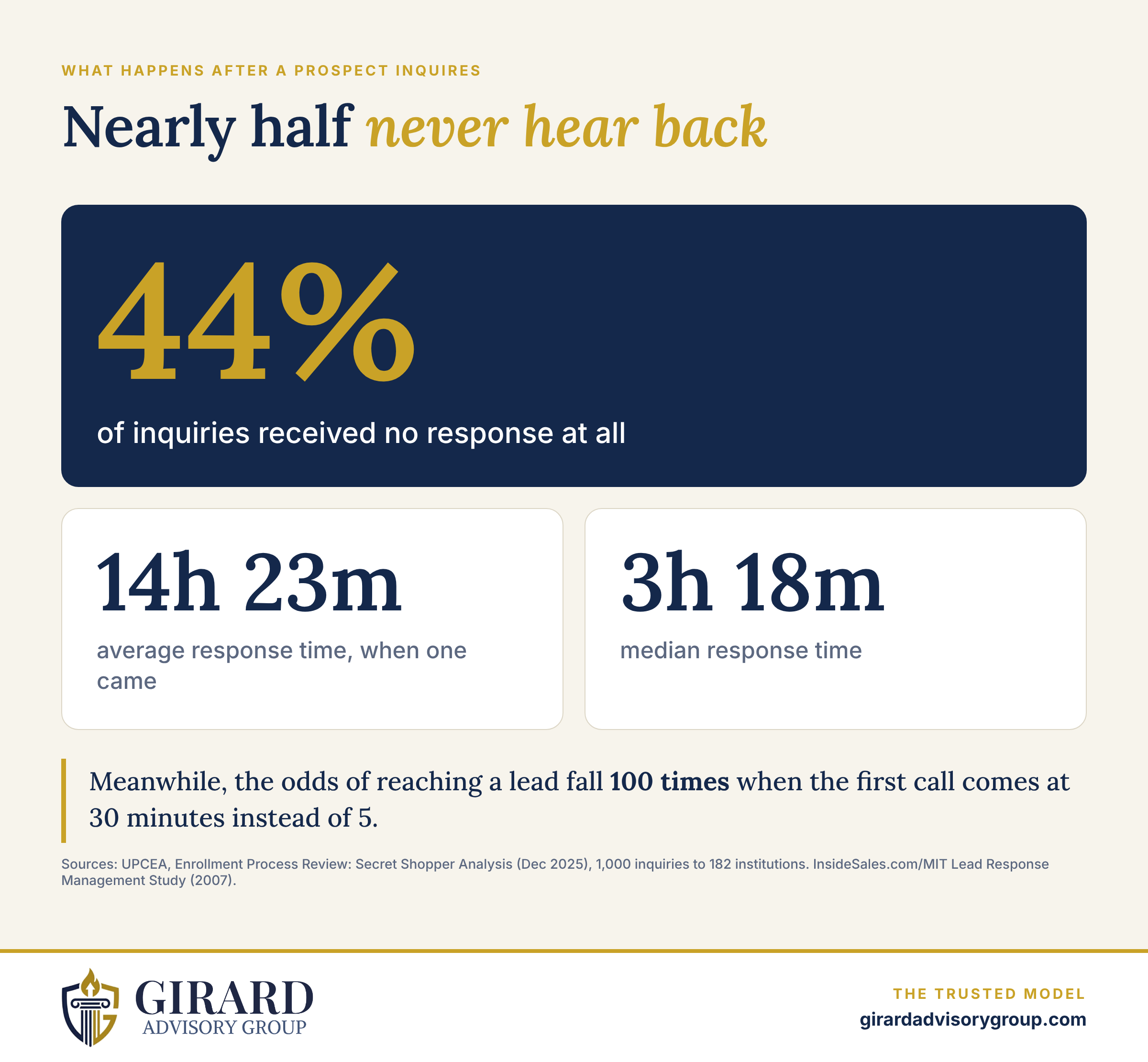
Trust built at the marketing layer collapses when the student's actual experience contradicts it. A campus that promises responsiveness but takes three days to return an inquiry call, or promises transparency but buries program costs, is not building trust — it is borrowing it. The operational reality of the campus is the foundation on which every other surface rests.
Read: How to deploy AI in school operations without losing the human work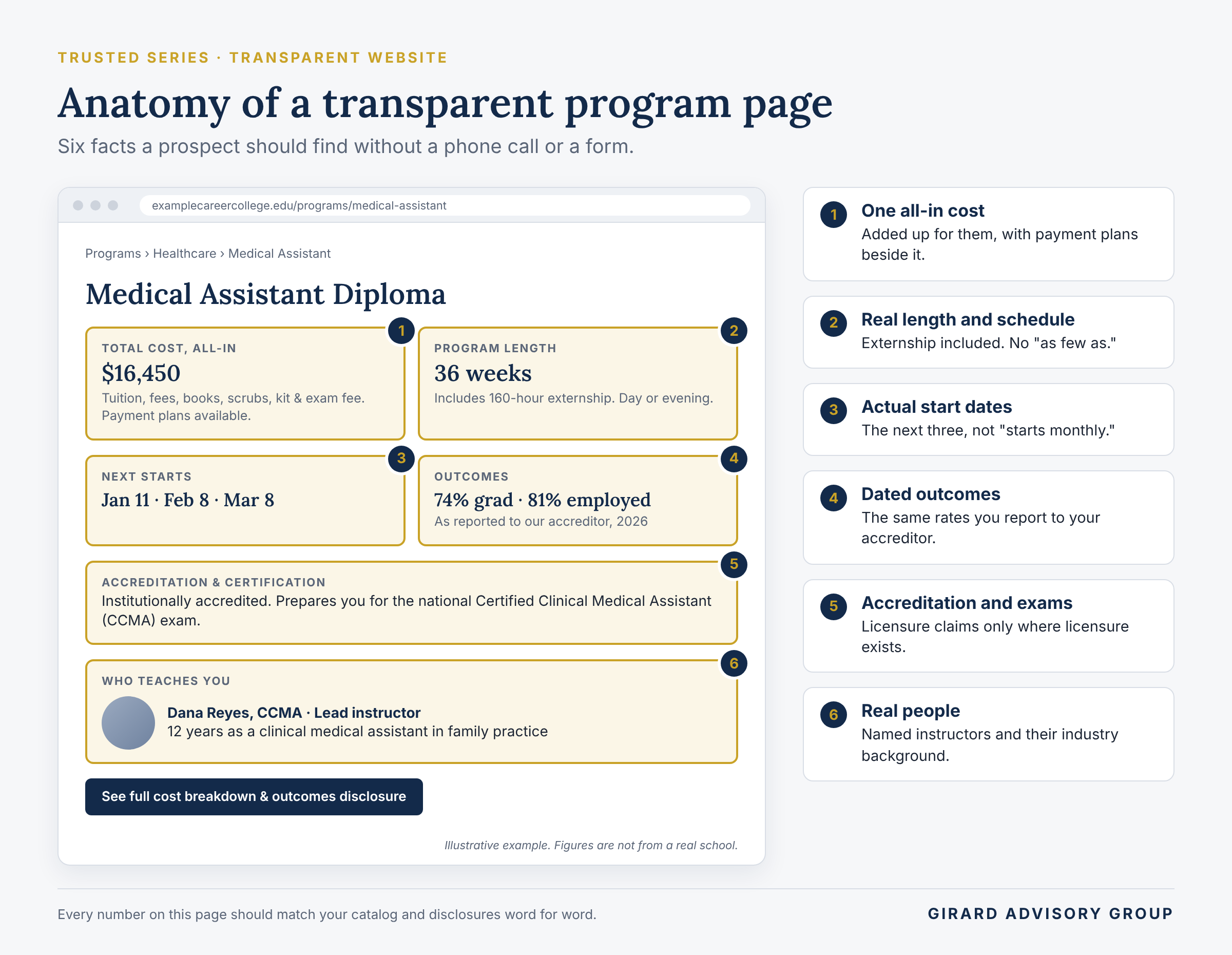
Surface 5 of 7
Tested by culture
Culture is the prescription.
The first four surfaces diagnose the same underlying problem: trust cannot be manufactured at the edge of an institution. It has to be built at the center. A coherent brand, a durable reputation, a credible AI presence, and a reliable operation are all downstream of a campus culture that actually cares about students. The CARING+ framework is the mechanism for building that culture — five observable conditions that determine whether a student persists.
Read: The CARING+ model of campus engagement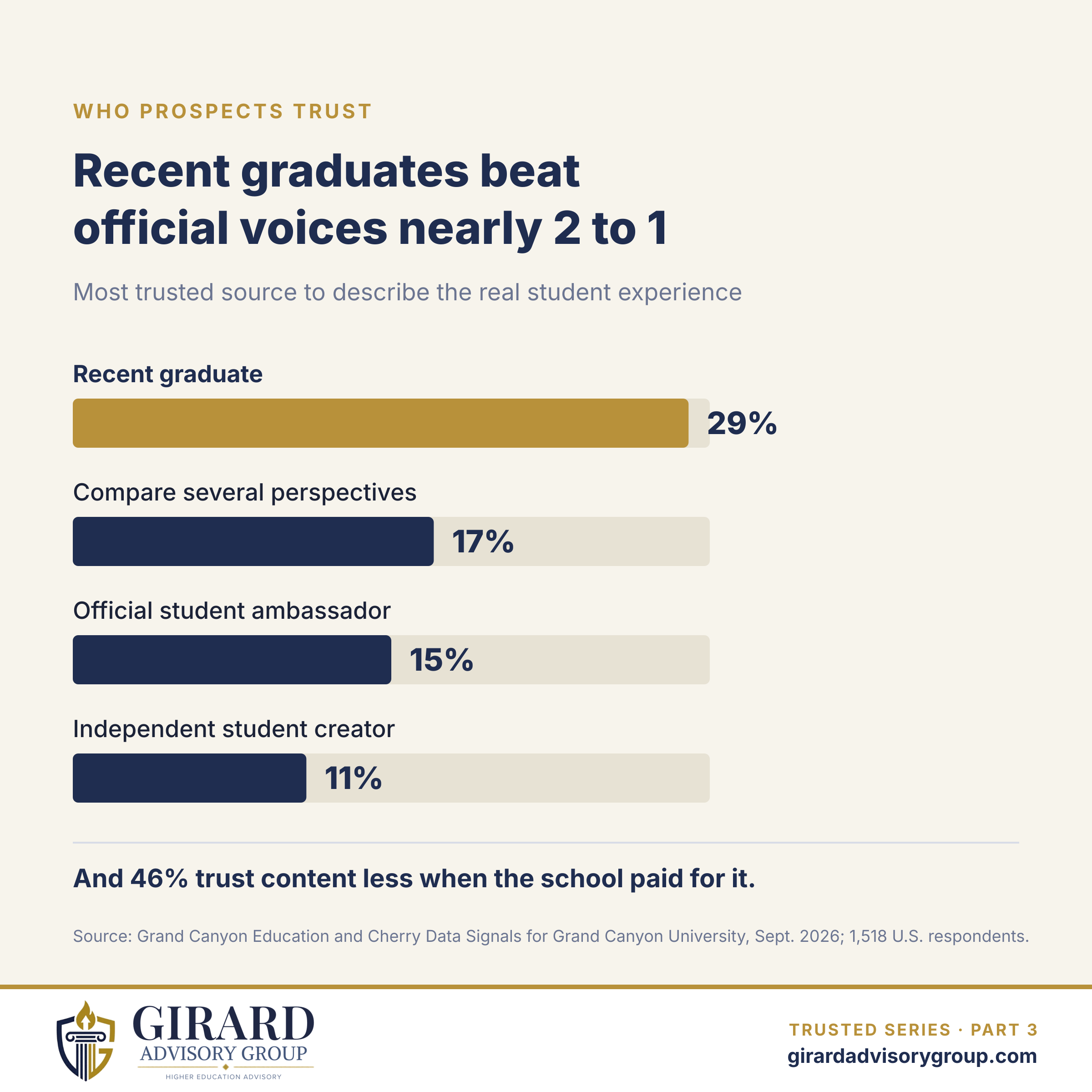
Surface 6 of 7
Embodied by leadership
Leadership makes culture durable.
A culture model does not become real because it is announced. It becomes real when leaders let people experience the change, enlist trusted peer coaches, protect time for dialogue, and embed the work in regular rhythms rather than one-time events. The campus president who models the five CARING+ conditions — who makes staff feel they matter, belong, are trusted, are growing, and can succeed — is the single most powerful implementation tool available.
Read: Culture is a leadership output — making CARING+ real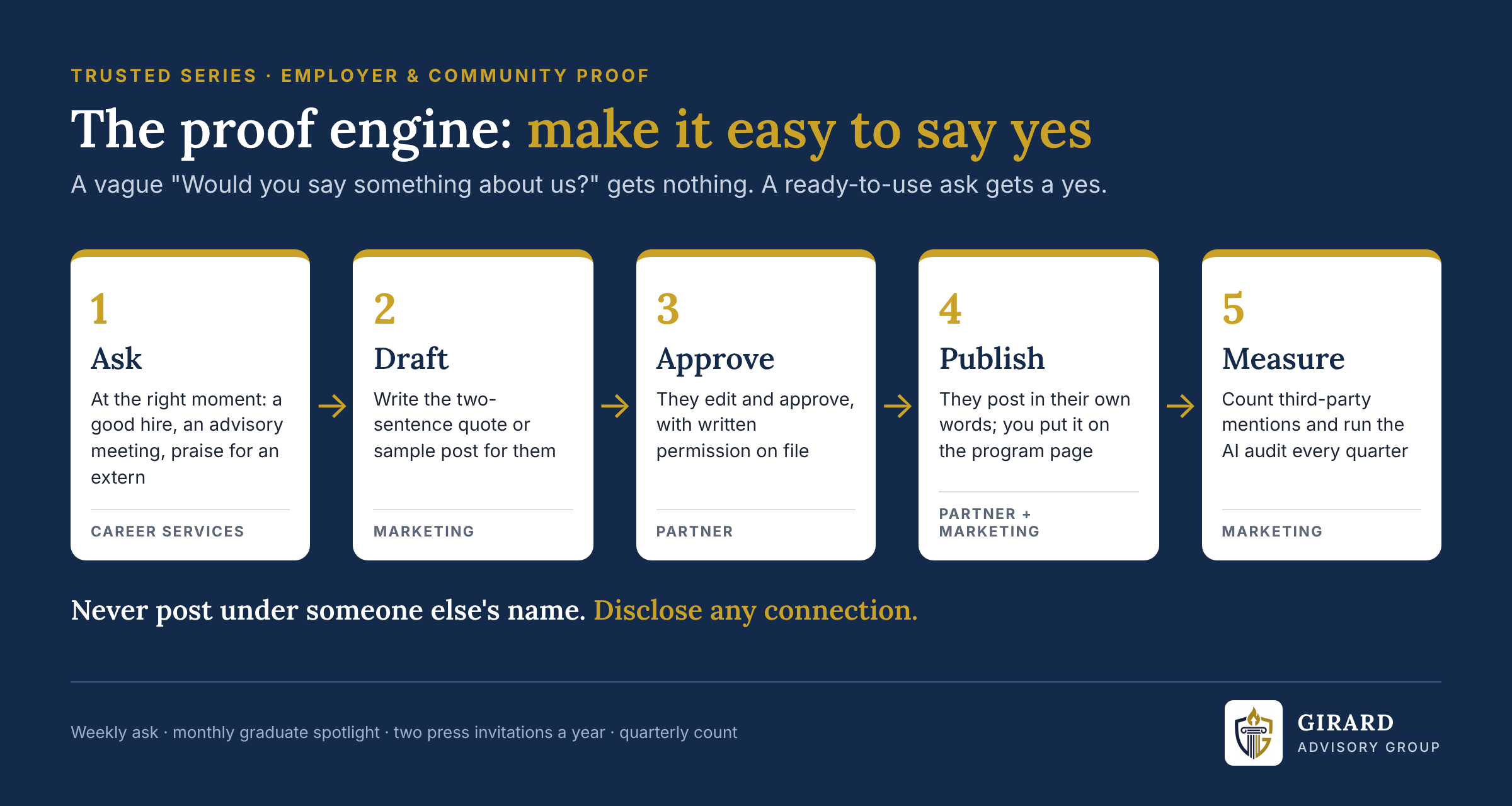
Surface 7 of 7
Demonstrated by proof
Earned proof is what AI trusts most.
The final surface is the one AI assistants weight most heavily: third-party proof. Employer testimonials, accreditor acknowledgments, graduate outcomes, community partnerships, and media coverage are the signals that corroborate everything else. A campus can say anything about itself. What employers, graduates, and accreditors say about it is the evidence that converts a prospect's consideration into an inquiry.
Read: Let someone else say it — third-party proof AI trusts most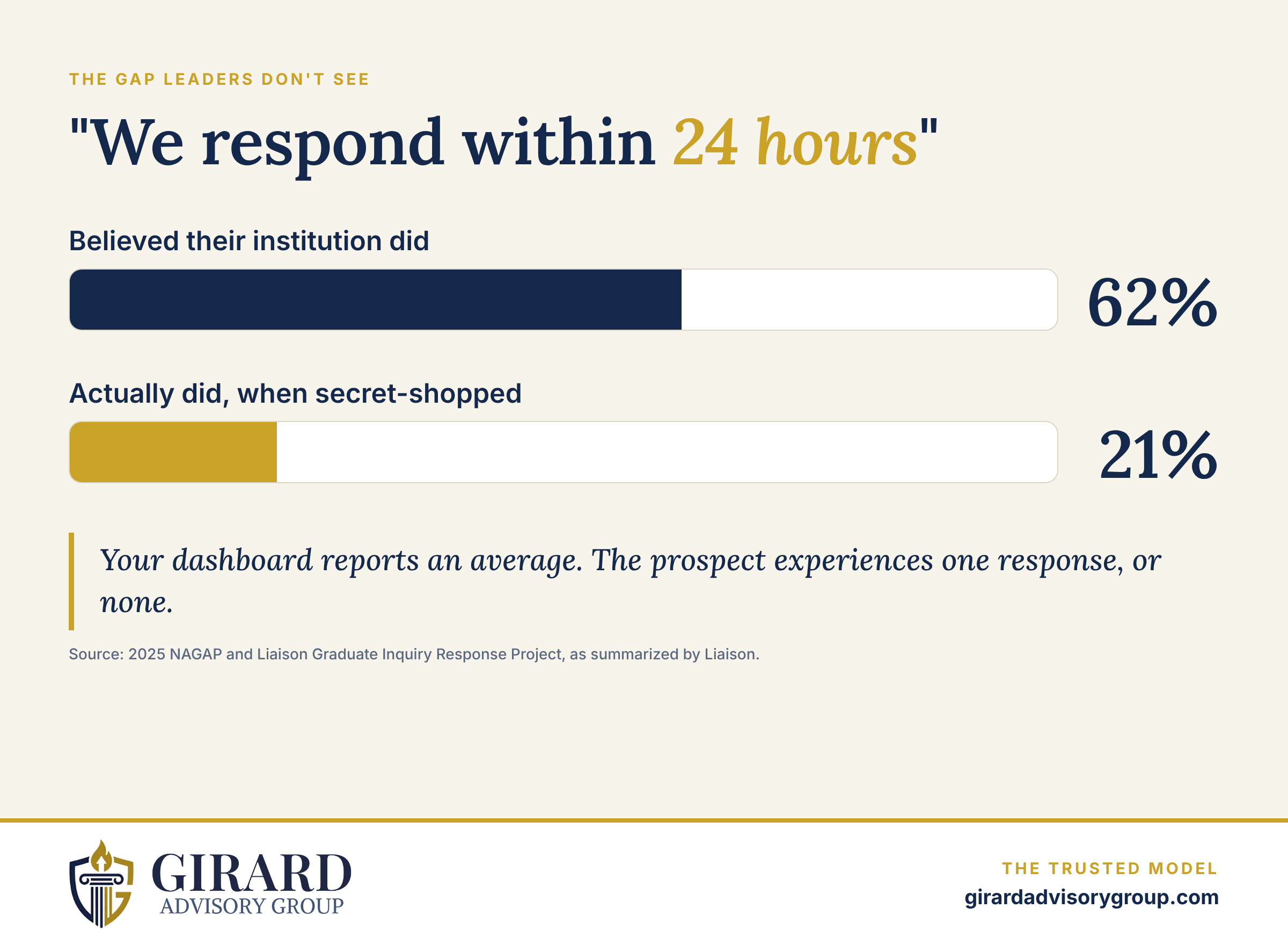
Read the TRUSTED series in full
Each post in the series goes deep on one surface — the research behind it, the diagnostic questions, and the specific actions that move the needle.
TRUSTED and CARING+ are the same argument, inside and out
TRUSTED is the external architecture of institutional credibility — the seven surfaces a prospect encounters before they inquire. CARING+ is the internal architecture — the five conditions that determine whether a student who enrolls persists to graduation.
They are not separate frameworks. The "T" and "E" surfaces in TRUSTED — culture and leadership — are built on CARING+. A campus that has not built the internal conditions cannot sustain the external credibility. The two frameworks are the inside and outside of the same institution.
Explore the CARING+ frameworkThe two frameworks
TRUSTED
Seven external surfaces that build prospect trust before the first inquiry. The architecture of institutional credibility in the market.
CARING+
Five internal conditions that determine whether an enrolled student persists to graduation. The architecture of institutional culture.
Together: the complete model for a career college that earns trust before the inquiry and keeps it through graduation.
Apply the TRUSTED framework to your campus
The Campus Health Diagnostic assesses all seven TRUSTED surfaces — and the five CARING+ conditions — in a structured two-to-four week engagement that ends with a written action plan.